🛋️ The Rise of Quiet Luxury: Crafting Understated Elegance in Your Home
By Er. Faisal Qureshi – Certified Interior Design Consultant
Reviewed by: – Interior Design & Wellness Division
Updated: May 31, 2025
🧠 What Is Quiet Luxury?
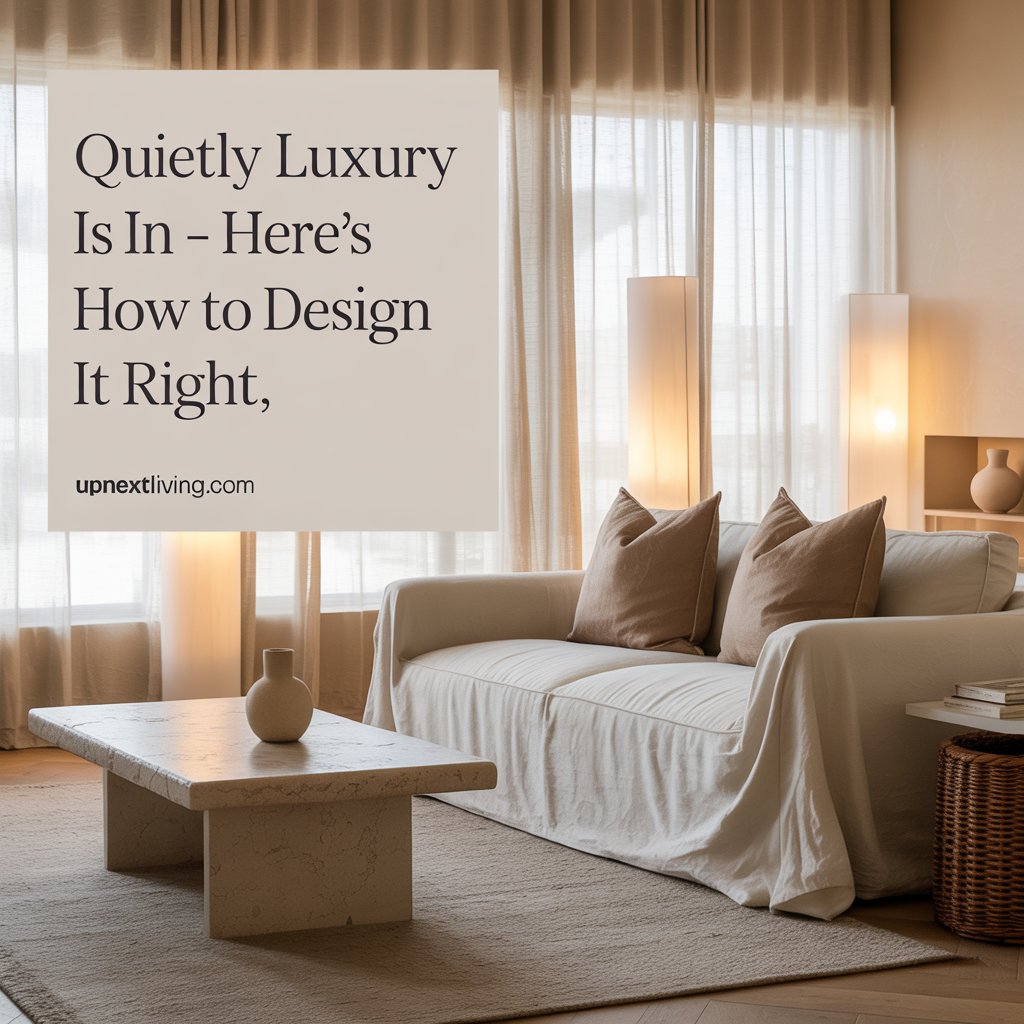
“Quiet luxury” is the defining design philosophy of 2025. It’s not just a visual trend — it’s a mindset. In a world that’s increasingly chaotic and overstimulated, quiet luxury offers a reprieve: a return to intentional living, where quality, calmness, and timeless beauty take center stage.
🪞Core Principles of Quiet Luxury:
- Subtle sophistication over loud statement pieces
- Premium materials that age well, such as linen, travertine, oak, wool, and cashmere
- Monochrome or neutral color palettes that create harmony
- Thoughtful curation instead of clutter
- Emotion over exhibition — the space should feel good, not just look impressive
Quiet luxury is not just about money. It’s about taste, restraint, and creating environments that support wellbeing.
🎯 Why Quiet Luxury Is Trending in 2025
As society shifts toward wellness, sustainability, and slower living, quiet luxury has emerged as a more meaningful approach to design. It resonates with people seeking:
- A sanctuary-like home that supports mental peace
- A break from mass-produced, disposable decor
- A visual identity rooted in calm confidence, not consumerism
The pandemic, economic uncertainty, and growing environmental awareness have driven homeowners toward conscious, soulful design — and quiet luxury embodies all of it.
🛋️ Designing a Quiet Luxury Living Room

The living room is the heart of the home — and in quiet luxury, it becomes a haven for connection and comfort.
🔹 Quiet Luxury Living Room Elements:
- A deep-seated neutral sofa in boucle, linen, or cotton velvet
- A solid wood or stone coffee table with natural veining
- Mood lighting with dimmers, floor lamps, and warm LED strips
- Minimal, high-impact accessories like ceramic vases or abstract sculpture
- Wall art in monochrome or earth tones, preferably textured or matte
Avoid branded furniture or flashy gold accents. Instead, let texture, form, and flow create the visual interest.
🛏️ The Quiet Luxury Bedroom: Elegance Meets Serenity
In quiet luxury, the bedroom isn’t just a place to sleep — it’s a restorative retreat.
🔸 Bedroom Essentials for Understated Elegance:
- A padded headboard in natural fibers
- Luxurious, organic cotton or linen bedding (ideally in shades like sand, stone, or ivory)
- Minimalist bedside tables with intentional lighting
- Wool or silk-blend rugs for underfoot texture
- A scent corner with essential oils, handmade candles, or a diffuser
The key is to eliminate visual chaos. Hide cables. Use underbed storage. Let every object have purpose.
🪑 Materials That Define Quiet Luxury
Quiet luxury thrives on materials that feel good to touch, age gracefully, and add depth to a room without screaming for attention.
| Material | Why It’s Ideal for Quiet Luxury |
|---|---|
| Natural Stone | Adds texture, timelessness, and organic elegance |
| Linen & Cotton | Breathable, tactile, and naturally luxurious |
| Warm Woods (oak, walnut) | Softens spaces while adding richness and structure |
| Wool & Cashmere | Comforting, soft, and a symbol of quiet indulgence |
| Ceramic & Terracotta | Earthy, handmade feel; adds authenticity |
🌿 Sustainability & Quiet Luxury
Quiet luxury isn’t just about aesthetics — it’s deeply tied to sustainability and mindful consumption. Rather than filling a space with throwaway trends, homeowners now invest in:
- Local artisan-made furniture
- Pre-loved or vintage finds
- Handcrafted accessories with story and soul
- Timeless palettes that don’t require frequent repainting or restyling
This movement is about buying less, but better — in line with slow living values.
🧘♀️ Quiet Luxury & Mental Wellness
Scientific studies confirm that our physical surroundings affect our mental health. Quiet luxury promotes wellness through:
- Color psychology (neutral tones soothe the nervous system)
- Minimal clutter (which reduces cognitive overload)
- Textural harmony (soft fabrics, natural wood, flowing drapery)
- Functional flow (intuitive layout that respects movement and light)
A quiet luxury home becomes a daily act of self-care.
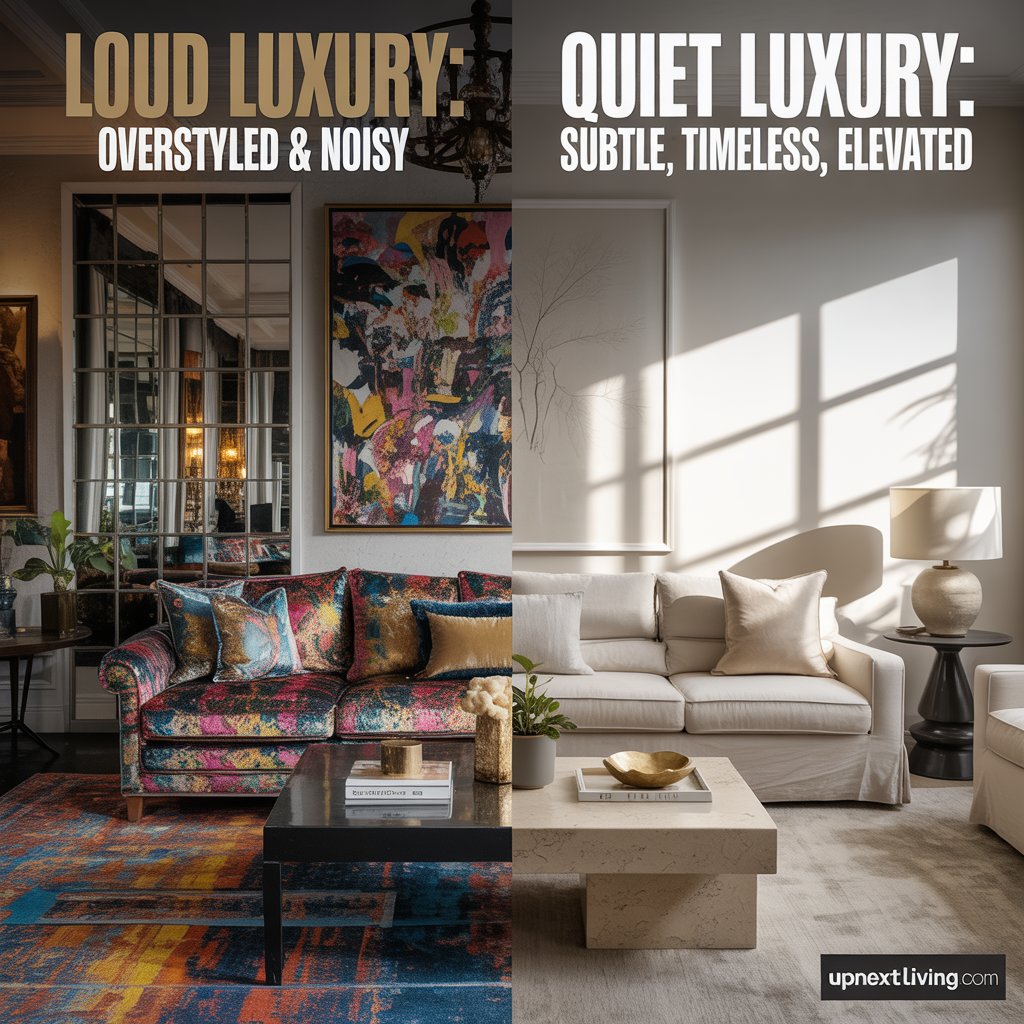
🆚 Quiet Luxury vs. Loud Luxury: What’s the Difference?
| Aspect | Quiet Luxury | Loud Luxury |
|---|---|---|
| Style Expression | Subtle, timeless | Bold, trend-driven |
| Materials | Natural, organic, high-quality | Synthetic, mass-produced, sometimes low-quality |
| Decor Approach | Curated, minimalist | Maximalist, showy |
| Emotional Feel | Calming, restorative | Flashy, energizing |
| Focus | Comfort, craftsmanship | Attention, prestige |
📋 Quiet Luxury Home Design Checklist
- Neutral color scheme with warm undertones
- Soft, indirect lighting (multiple sources)
- At least one statement material: stone, linen, oak
- Hidden or minimal storage to reduce clutter
- A few meaningful accessories or heirlooms
- Tactile softness: wool rugs, suede pillows, silk drapes
- Locally or ethically sourced furniture
FAQs
🙋 FAQs: Understanding Quiet Luxury in Interior Design
Q1. Is quiet luxury suitable for small homes?
A: Yes — in fact, small spaces benefit most from this approach. Quiet luxury emphasizes space efficiency, simplicity, and calm, making compact homes feel more open and elevated.
Q2. Do I need to buy expensive items to achieve quiet luxury?
A: Not at all. It’s more about intention and material quality than price. You can find affordable, high-quality vintage or handmade pieces that embody quiet luxury.
Q3. How do I transition from bold or maximalist decor to quiet luxury?
A: Start by decluttering and choosing a neutral color scheme. Then swap out busy patterns for natural textures, and replace mass-market decor with fewer, better-made pieces.
Q4. What colors define the quiet luxury palette?
A: Think soft earth tones — warm white, beige, greige, taupe, olive, dusty rose, stone gray, and soft black as accent.